Receivers and splitters
Accurate positioning and reliable navigation depend on strong and consistent GNSS signals. GPS receivers and signal splitters play a key role in ensuring that navigation systems, onboard electronics, and connected devices receive the positioning data they need to operate effectively.
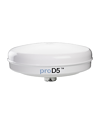
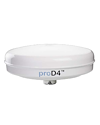
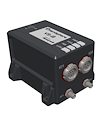
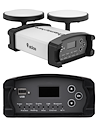
A GPS receiver processes signals from global navigation satellite systems (GNSS) to determine a vessel’s precise location, speed, and heading. Modern receivers often support multiple satellite constellations—such as GPS, GLONASS, Galileo, and BeiDou—to improve accuracy, availability, and reliability even in challenging environments. These receivers are commonly used in marine navigation systems, chartplotters, AIS equipment, surveying tools, and other applications where dependable positioning is essential.
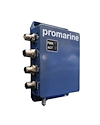
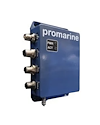
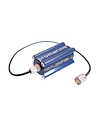
Signal splitters allow multiple devices to share the same GNSS antenna without degrading signal quality. Instead of installing separate antennas for each system, a splitter distributes the incoming signal to several receivers simultaneously. This helps reduce the number of antennas required on the vessel, simplifies installation, and minimizes potential interference between onboard systems.
Together, GPS receivers and signal splitters help create a more efficient and reliable navigation setup by delivering accurate positioning data to multiple systems while maintaining strong signal performance.